Science tutoring works best when the goal is more precise than “catch up.” Identify the province, grade or course, then separate concept knowledge, mathematical skills, scientific vocabulary, lab reporting and study habits.
Curricula differ across Canada. Ask the tutor to use the learner’s current course expectations and school evidence, and to teach safe reasoning rather than recreate risky laboratory activities at home.
Diagnose the type of difficulty
A student may understand a scientific idea but struggle to read a dense question, rearrange an equation or connect evidence to a conclusion. Bring a recent assessment and ask the tutor to think aloud about what it reveals before proposing a plan.
- Concept gap: explain and represent the idea in more than one way.
- Math gap: isolate the calculation without losing the science context.
- Communication gap: practise claims, evidence, units and diagrams.
- Study gap: use retrieval and mixed practice instead of rereading alone.
Match the tutor to the course
General elementary science, Grade 10 science and senior chemistry or physics demand different depth. Confirm recent experience with the exact subject and provincial course. A university major can bring subject depth; a certified teacher may bring curriculum and assessment experience. Ask for evidence rather than relying on the label.
Keep practical work safe
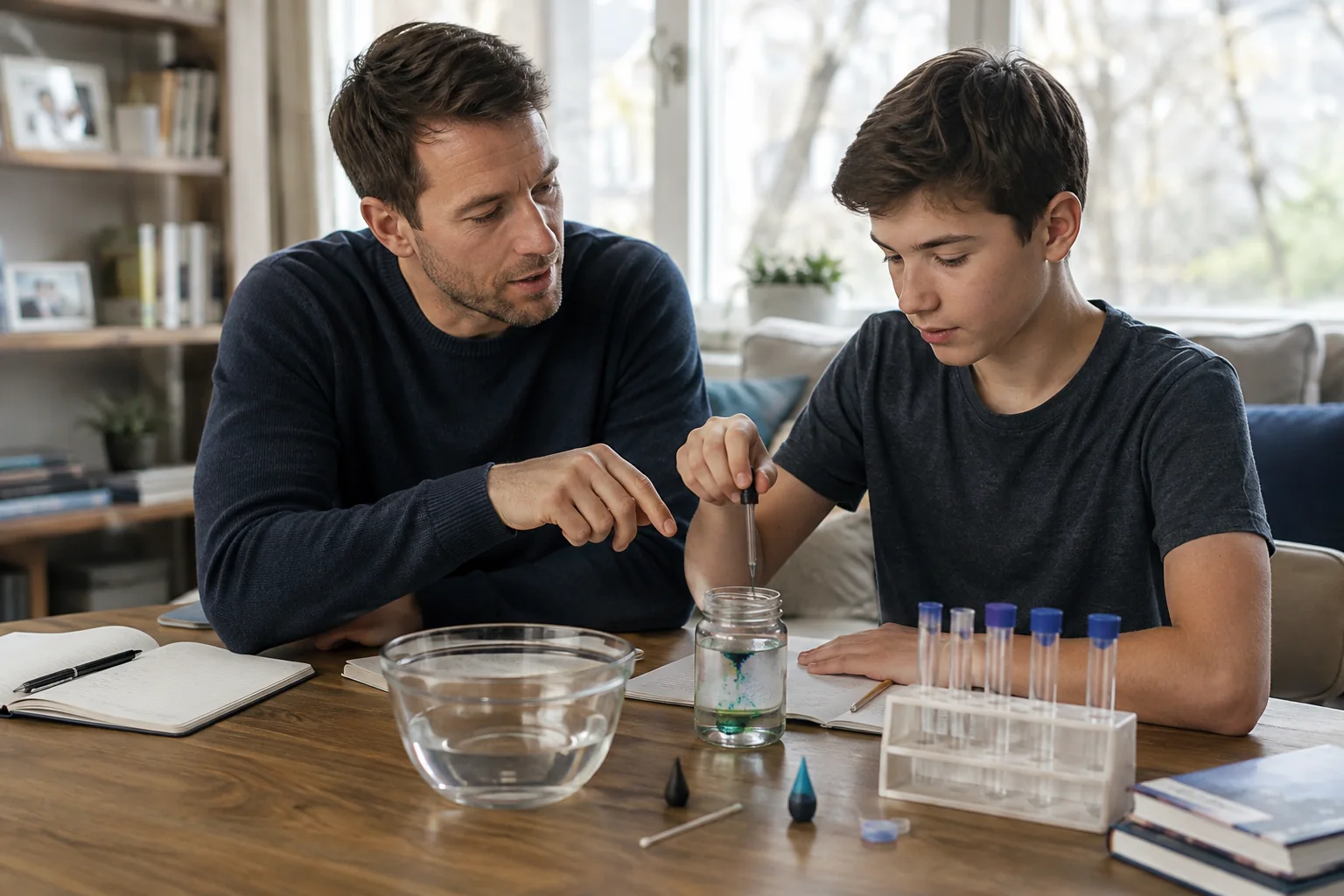
A tutor can discuss variables, interpret provided data and use ordinary household demonstrations when appropriate. They should not improvise hazardous chemicals, flames or procedures outside a properly supervised setting. School laboratory instructions and local safety rules take priority.
Choose a format and review point
Online tutoring can work well for diagrams, data and specialized senior courses. In-person work may help younger learners handle models and written work. Agree on a short trial goal and review whether the learner can explain or apply the idea independently.
Take to the first conversation
Questions to ask before booking
- Which provincial course and topics have you supported recently?
- How would you distinguish a science gap from a reading or math gap?
- How do you handle laboratory questions without unsafe home experiments?
- What will the student produce or explain during a session?
- When will we review whether the plan is working?
Frequently asked questions
Does a science tutor need a science degree?
Not always. Relevant subject depth matters more as courses become specialized, but clear teaching, curriculum familiarity and dependable boundaries also matter.
Can tutoring replace a school laboratory?
No. Tutoring can support concepts, data analysis and reports, but required laboratory work belongs in the supervised setting designated by the school.
How can we tell if tutoring is helping?
Use a narrow measure such as explaining a concept without notes, selecting a method for a new problem or revising a lab conclusion from evidence.