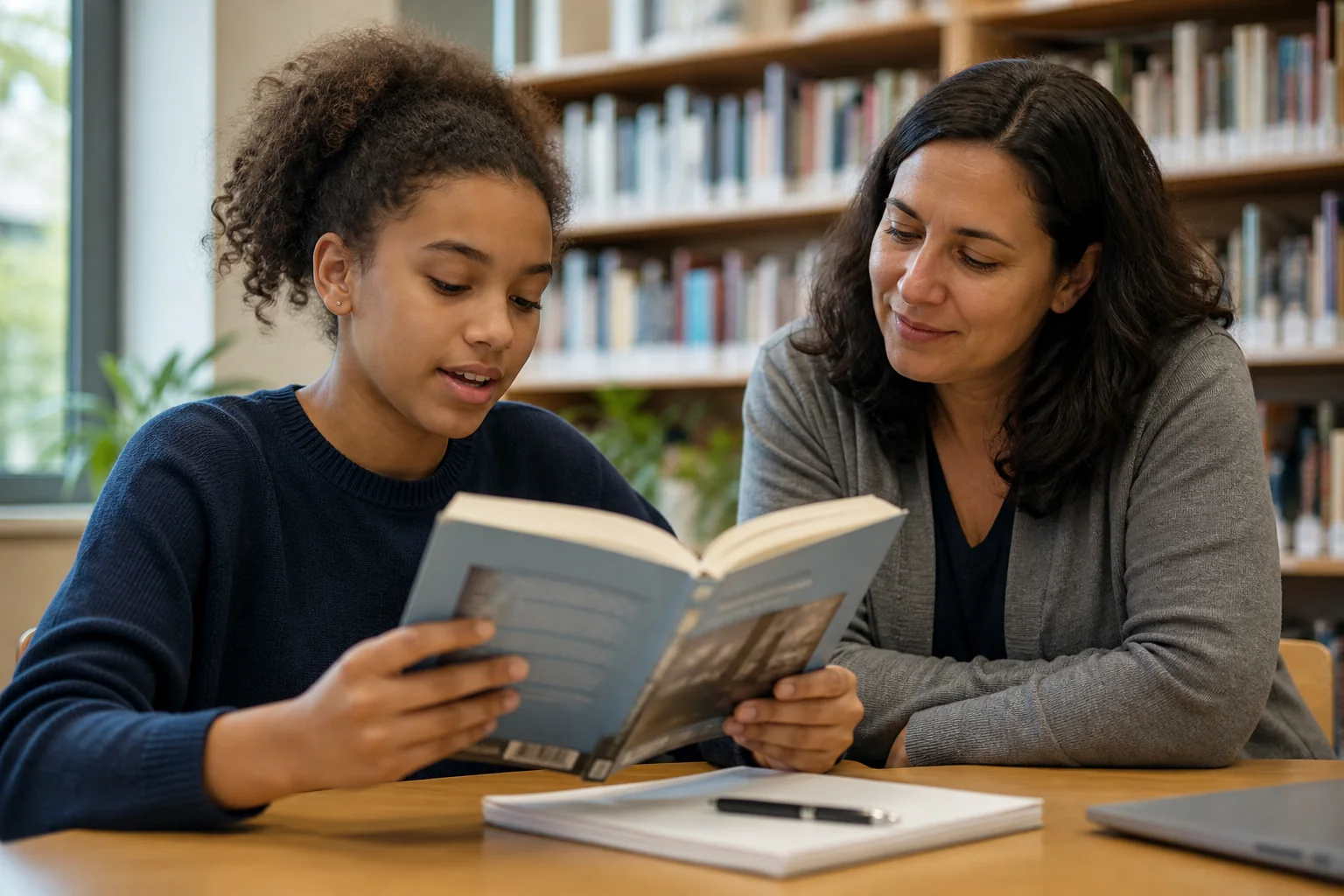
Choose a French tutor by the task the learner must perform—not by fluency alone. Conversation practice, early reading, written accuracy, Core French and learning math or science in French Immersion require different preparation. A tutor should understand the student’s program, listen to a sample of speaking or reading and define a narrow first goal.
Education is provincial and territorial, so program names, entry points and expectations vary across Canada. Confirm the learner’s school program and ask the tutor to work from current classroom evidence rather than assuming one national sequence.
What this means for your student
First separate a French-language difficulty from a difficulty with the subject being taught in French. A learner who cannot explain a science idea in either language may need science support; a learner who understands the concept in English but cannot access the French question may need language scaffolding. The distinction shapes the tutor search.
- Core French: oral interaction, comprehension, vocabulary and program-specific tasks
- French Immersion: French plus the language needed to learn other subjects
- Francophone schooling: support should respect French as the language of instruction
- Adult learning: conversation, workplace, academic or test goals need different practice
Reading, writing and conversation need different evidence
For reading, ask how the tutor checks decoding, fluency, vocabulary and comprehension without simply translating every line. For writing, look for feedback that lets the student revise their own sentence rather than receiving a rewritten answer. For speaking, the tutor should create enough wait time and purposeful repetition for the learner to produce language.
- Ask for a short demonstration using the learner’s actual task.
- Notice whether corrections are selective and understandable.
- Check that pronunciation work does not become accent shaming.
- Confirm that the learner speaks or reads for a substantial part of the session.
Who may be a good French tutor?
A certified FSL or francophone teacher may know program expectations and classroom assessment. A fluent university student or experienced language tutor may offer strong conversation practice and recent learner perspective. A native speaker is not automatically trained to teach, and a non-native speaker is not automatically less capable. Compare proficiency, instructional skill and direct experience with the goal.
Online, in person or a small group
Online lessons can make it easier to find a tutor with a particular regional, academic or examination background and can support audio playback or shared writing. In-person lessons may suit young learners who need physical books, picture prompts or movement. Small groups can make conversation more natural, but the tutor must still notice each learner’s participation.
Current French price examples
On September 5, 2026, NannyServices.ca reported a median requested rate of $22.50 per hour across 43 French-tutor profiles in Toronto and $23 per hour on its Calgary French page. These figures describe advertised requests under those marketplace filters, not completed transactions, a quote for a particular program or a national average. Confirm session length, travel, preparation, materials, tax and cancellation terms before comparing options.
Supporting French when adults at home do not speak it
Parents do not need to impersonate a French teacher. They can protect a routine, ask the child to explain the task in either language, use library audio and print resources, and communicate with the classroom teacher. The federal government supports second-language learning through agreements with provinces and territories, but the actual school program remains locally defined.
Take to the first conversation
Questions to ask before booking
- Is your experience mainly Core French, French Immersion, francophone schooling or adult language learning?
- How will you distinguish a language gap from a subject-content gap?
- How much of the session will the learner speak, read or write?
- How do you correct errors without interrupting every attempt?
- Can you use the learner’s provincial curriculum and current school material?
- How will we know whether the learner is becoming more independent?
Frequently asked questions
Does a French tutor need to be a native speaker?
No. High proficiency matters, but so do teaching skill, program knowledge and the ability to diagnose the learner’s specific need. Ask for evidence that matches the task.
Can tutoring help a child stay in French Immersion?
Tutoring may strengthen language or subject access, but it cannot determine by itself whether a program is appropriate. Discuss persistent difficulties, accommodations and wellbeing with the student and school.
Should a French tutor translate everything into English?
Strategic clarification can help, but constant translation may reduce the learner’s opportunity to build comprehension in French. The tutor should adjust language, visuals and context while keeping the student engaged with French.